Latest News
- Legendary Mask Maker, Zagone Studios, Approaches Fifty-Years Of Innovation Right Here In Chicago
- A Whisper Becomes Thunder: Bob Dylan Haunts The Genesee Stage From The Shadows
- Photo Gallery: C2E2 2026 Chicago
- C2E2 2026: A Teen’s Dive Into Chicago’s Ultimate Nerd Pop Culture Universe
- Echoes Reawakened: The Chameleons Bring Their Timeless Sound Back to North America
- Photo Gallery: Gogol Bordello @ 9:30 Club (Washington, DC)
A Whisper Becomes Thunder: Bob Dylan Haunts The Genesee Stage From The Shadows
By Harrison Kristoff
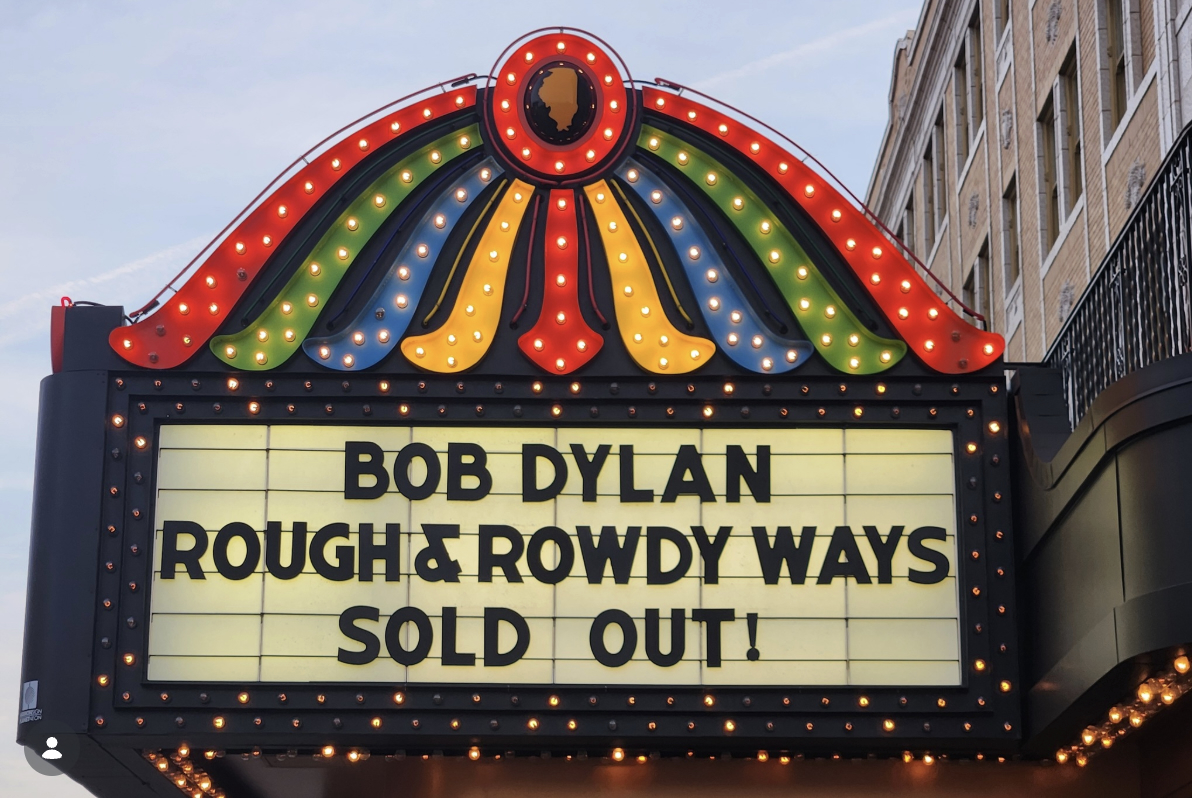
Monday not at the Genesee Theatre, Bob Dylan once again proved that his live show remains less a nostalgia trip and more a living, breathing reinterpretation of his own mythology. Now deep into the Rough and Rowdy Ways era of his “Never Ending Tour,” Dylan delivered a set that felt deliberate, shadowy, and uncompromising exactly as it should be.
This was the first time Dylan has played the Genesee Theatre as he’s touring smaller venues like this for his 2026 tour. Actually, only a few dates in smaller theaters and auditoriums. From the moment the lights dimmed, the visual tone was unmistakable. The stage was cloaked in darkness, with minimal, moody lighting that barely revealed the band. Dylan himself was positioned far back, almost withdrawn from the spotlight, stationed beside drummer Anton Fig. Dressed in a simple hoodie, he cut an intentionally unassuming figure more like a band member lurking in the shadows than the towering icon at center stage. It was a striking choice, Dylan as ghost rather than frontman.
Opening with “To Be Alone With You” and “Man in the Long Black Coat,” he set a tone of smoky intimacy, seated behind the electric keyboard. His voice, a weathered instrument, bent phrasing rather than followed it but what stood out just as much was the volume. The entire performance sat at an unusually low level, forcing the audience to lean in, to meet the music on its terms. As the night went on, Dylan even pushed the microphone further and further away from himself, creating an almost elusive vocal presence, as if he were deliberately receding into the sound.
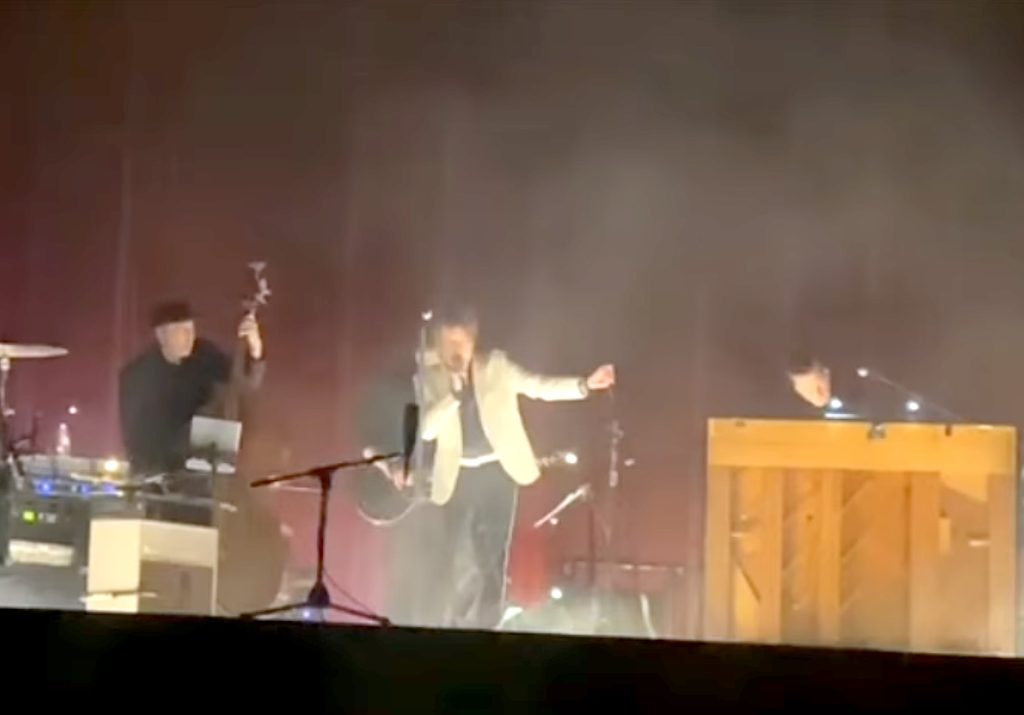
“All Along the Watchtower” arrived early, transformed once again, less explosive than its Hendrix-echoed legacy, more haunting, like a warning whispered instead of shouted.
Much of the night leaned into his later catalog, with Rough and Rowdy Ways selections dominating: “I Contain Multitudes,” “False Prophet,” “Black Rider,” and “Crossing the Rubicon” formed the spine of the show. These songs, dense with imagery and delivered in Dylan’s modern croon, felt perfectly suited to the dim, noir-like atmosphere.
Still, Dylan understands pacing. “Love Sick” and “Forgetful Heart” added a ghostly, romantic ache, while “When I Paint My Masterpiece” offered one of the night’s few moments of melodic familiarity. A pair of covers; Bo Diddley’s “I Can Tell” and Eddie Cochran’s “Nervous Breakdown”, injected a jolt of raw, rootsy energy, though even these carried the show’s subdued sonic palette.
But the night’s most electric moment came at the very end. As Dylan moved into “Every Grain of Sand,” the room seemed to hold its breath until, mid-song, he reached for the harmonica. The reaction was immediate and explosive. The crowd, reserved and almost reverent all evening, suddenly erupted. That piercing, lonesome harmonica tone cut clean through the otherwise hushed mix, a sharp contrast to the low-volume murmur that defined the night. In that instant, the distance Dylan had created, physically and sonically, collapsed into something intimate and deeply human.
Closing with “Every Grain of Sand” felt less like an ending and more like a quiet benediction, Dylan stepping briefly into clarity after an hour and a half of abstraction. There was no banter, no grand gestures, no attempt to connect in conventional ways. Instead, in 2026, Bob Dylan performs like a man deliberately fading into his own legend pulling the microphone away, stepping back into the shadows, yet somehow drawing the audience closer than ever.
For more on Bob Dylan, click here


- Bob Dylan, Chicago, concert review, Genesee Theatre, Illinois, Never Ending Tour, Rough and Rowdy Ways


Related Articles


More in this category